Salt-Free vs. Salt-Based Water Softeners: What’s the Real Difference?
The Ultimate Guide for Homeowners Comparing Softening vs Conditioning
For nearly two decades, salt-free water systems have been heavily marketed as “salt-free softeners.” The truth? A salt-free softener does not exist.
Salt-free units do not soften water. They condition water to help reduce scale—an important benefit, but not the same as soft water.
This guide breaks down the real differences, the science behind both systems, pros & cons, where each system works best, and how to decide which one is right for your home.
What Is Hard Water?
Hard water contains dissolved calcium and magnesium. These minerals cause:
-
Scale buildup on appliances
-
Soap scum
-
Dry skin & dull hair
-
Spotty dishes
-
Reduced efficiency of water heaters
Hardness Scale (WQA Standards)
| Hardness Level | Grains per Gallon (gpg) | mg/L (ppm) |
|---|---|---|
| Soft | < 1.0 | < 17 |
| Slightly Hard | 1.0–3.5 | 17–60 |
| Moderately Hard | 3.5–7.0 | 60–120 |
| Hard | 7.0–10.5 | 120–180 |
| Very Hard | > 10.5 | > 180 |
Why “Salt-Free Softener” Is Misleading
A true water softener removes hardness minerals using ion-exchange resin.
Salt-free units do not remove minerals, therefore they cannot soften water.
Calling them “softeners” is considered false advertising. Even the Water Quality Association (WQA) prohibits members from making this claim.
Salt-free technology = scale prevention
Salt-based softening = mineral removal
The two work very differently—and serve different purposes.
How Salt-Based Water Softeners Work
Salt-based softeners use ion exchange to physically remove hardness minerals.
How the Process Works:
-
Hard water enters the resin tank.
-
Resin beads attract calcium & magnesium.
-
Sodium or potassium ions are exchanged.
-
Softened water flows into the home.
-
The resin regenerates using a brine solution.
Benefits of True Soft Water
-
12× better cleaning & detergent efficiency
-
No scale buildup
-
Brighter, softer laundry
-
Spot-free dishes
-
Longer appliance lifespan
-
Silky skin & softer hair
Drawbacks
-
Requires salt refilling
-
Produces wastewater during regeneration
-
Adds small amounts of sodium (very low and safe)
How Salt-Free Water Conditioners Work
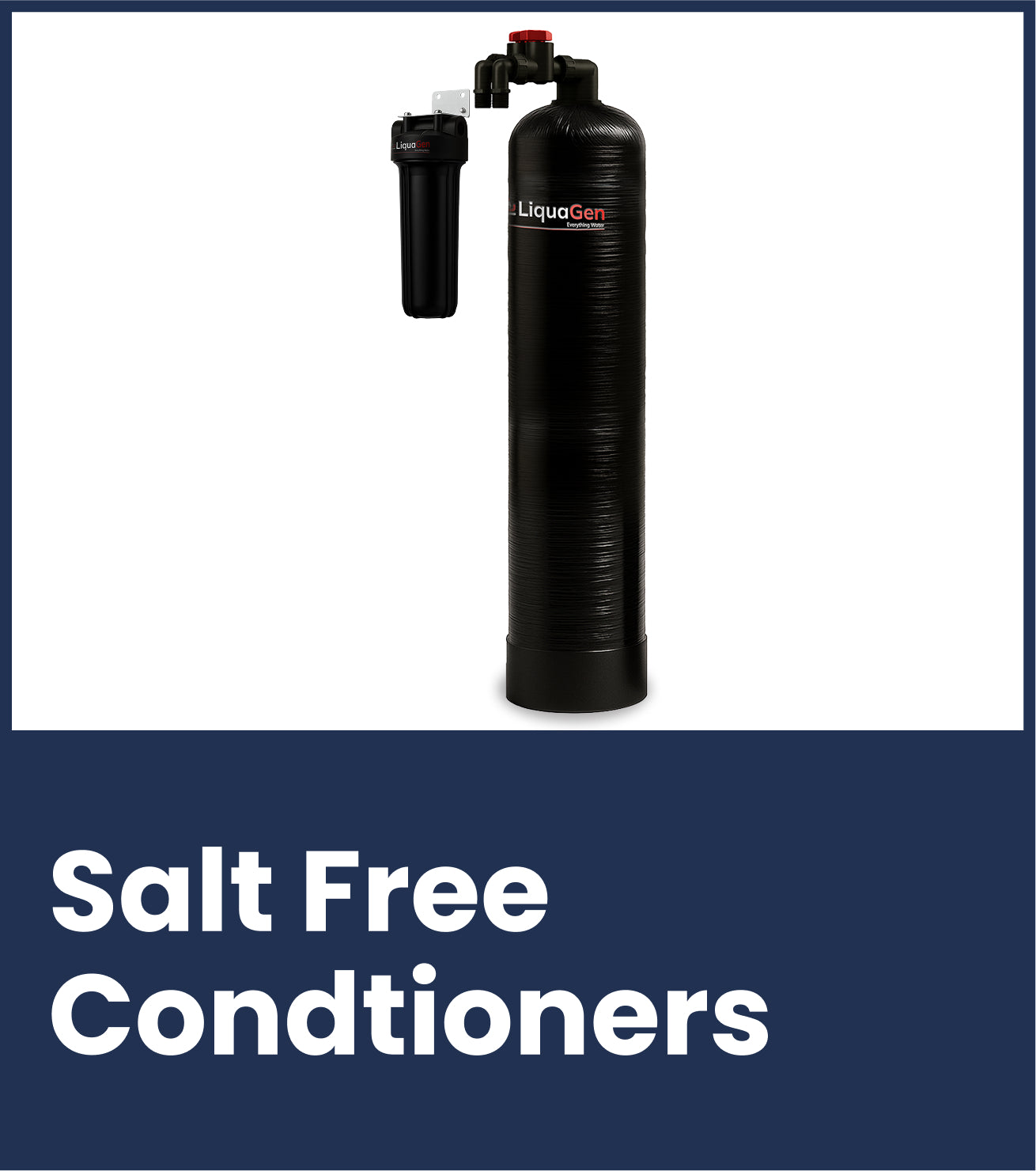
Salt-free conditioners use technologies like TAC (Template Assisted Crystallization) or NAC (Nucleation Assisted Crystallization).
The most common media, such as Filtersorb SP3, converts dissolved hardness minerals into microscopic crystals that cannot stick to plumbing.
What They Do:
-
Prevent scale buildup
-
Reduce existing scale slowly
-
Protect water heaters and fixtures
What They Do NOT Do:
-
They do not remove hardness
-
They do not soften water
-
They do not eliminate spotting or soap scum
Benefits of Salt-Free Conditioning
-
No salt, no chemicals
-
Zero wastewater
-
Low-maintenance
-
Eco-friendly
-
No slippery feel
-
Ideal for tankless heaters
Limitations
-
Not suitable for extremely hard water
-
Does not improve soap efficiency
-
No improvement in laundry softness
-
Cannot remove iron, manganese, or sediment (pre-filtration required)
Other Salt-Free Technologies
While TAC/NAC are the most proven, other conditioning methods exist:
1. Citric Acid (Chelation)
Used by brands like NuvoH2O
-
Binds minerals using citric acid
-
Can lower pH and cause corrosion
-
Not ideal for whole-house use
2. Polyphosphate Systems
Used for water heaters
-
Creates a protective coating inside pipes & appliances
-
Great for hot water protection
-
Does not treat cold water scale
Salt-Free + Limeblaster: Best for Hot Water Systems
Systems like the Limeblaster add polyphosphate protection to the hot water line.
When paired with a salt-free conditioner, this combination provides the strongest scale protection possible—especially for tankless water heaters.
Salt-Free vs. Salt-Based: A Side-by-Side Comparison
| Feature | Salt-Based Softener | Salt-Free Conditioner |
|---|---|---|
| Removes Hardness | ✅ Yes | ❌ No |
| Eliminates Spots | ✅ Yes | ❌ No |
| Prevents Scale | ✅ Yes | ✅ Yes |
| Removes Existing Scale | ❌ No | ✅ Slowly |
| Eco-Friendly | ❌ Uses salt & water | ✅ Zero waste |
| Maintenance | Medium | Very Low |
| Slippery Feel | Yes (soft water) | No |
| Safe for Plants | No | Yes |
| Works for Very Hard Water | Best option | Limited |
| Improves Soap Efficiency | Up to 50–70% | No |
Where Salt-Free Conditioners Are the Best Choice
A salt-free conditioner is ideal when:
-
Water softeners are banned (some CA, TX, MI, CT, MA regions)
-
You want scale prevention without salt
-
You prefer low maintenance
-
You dislike the slippery feel of soft water
-
You want to protect tankless water heaters
-
You want an eco-friendly approach
Where Salt-Based Softeners Are the Best Choice
Choose a salt-based softener if you want:
-
Truly soft water
-
Spot-free glasses
-
Softer, brighter laundry
-
No soap scum
-
Maximum cleaning efficiency
-
Best protection for plumbing & appliances
A conditioner prevents scale, but a softener eliminates hardness—and the difference is huge.
Which System Should You Choose?
The right choice depends on your goals:
Choose a Salt-Based Softener if:
✔ You want true soft water
✔ You want the best cleaning performance
✔ You want to eliminate all scale & spotting
✔ Your hardness level is high
Choose a Salt-Free Conditioner if:
✔ You only want scale prevention
✔ Your region restricts softeners
✔ You want a zero-waste, eco-friendly option
✔ You dislike salt maintenance
✔ You mainly want protection for tankless heaters
Final Verdict: Salt-Free vs. Salt-Based Softener
Salt-based softeners are the only systems that produce genuine soft water.
Salt-free systems offer excellent scale protection, but do not soften water.
Both technologies have value—but serve different purposes.
If you need help choosing the right system based on your water test results or home size, LiquaGen can help you find the perfect setup.
Leave a comment
This site is protected by hCaptcha and the hCaptcha Privacy Policy and Terms of Service apply.